
Form OTN-1 · Register
Loading the Register.
Form OTN-2
Get the
new issue.
Monthly intel on jurisdictions, structures, and entity strategy for builders in crypto and tech.
Form OTN-1 · Register
Loading the Register.
Form OTN-2
Monthly intel on jurisdictions, structures, and entity strategy for builders in crypto and tech.
This is to certify that the entry
was filed in the Register on 8 May 2025, under the jurisdictions UAE, Jurisdictions, Web3 Entrepreneurship and Crypto.
Standfirst
In this post, we take a closer look at the UAE as an attractive place to relocate, with a focus on Web3 builders, and guide you through the setup in 4 key freezones to help you decide where to form your UAE entity, even if you do not go and live there.
The United Arab Emirates wants your gaming, Web3 or tech business to be based on their soil, and for the past few years they have been working hard to make their case pretty convincing.
The UAE is already a confirmed gaming nation with 31% of residents gaming in 2024, but younger generations are showing far greater interest. Interest in blockchain and crypto has followed and authorities across the Emirates have seen opportunity in this growing branch of tech, and have very deliberately been building "freezones", i.e. special jurisdictions to attract builders and investors in gaming, blockchain, defi, metaverse, tokenization and crypto.
The United Arab Emirates (UAE) is a federation of seven emirates including Dubai and Abu Dhabi, which is the capital. As part of a deliberate transition away from an oil-led economy there are already 46 economic free trade zones, also known as freezones, in operation. Many of them specialise in attracting a particular type of business such as technology & IT, media and creative services, real estate, finance and fintech, healthcare and wellness, logistics and trade, SME and startup companies, and renewable energy.
There are broadly three types of company available to incorporate in the UAE, mainland, offshore and freezones. This review focuses largely on freezones as having the greatest utility in Web3.
Freezones are geographically defined areas within which jurisdictions are created to provide a supportive environment for certain types of business. Typically this means more flexible administration and lighter rules, specific business licensing, infrastructure and resources. The freezones are administered by the local free zone authorities, unlike mainland businesses which are regulated by the main government.
Significantly freezones were designed to permit 100% foreign ownership. They are mainly intended for export and offshore business although it is still possible to conduct business with the mainland from a freezone company, but it is more complex to do this and it may require a local distributor or partner. Tax exemption features of the freezone will not apply to revenue from the local market.
The incorporation of a freezone company has some added benefits such as local residence visas, tax concessions, access to subsidised resources and flexible office arrangements. They are typically a magnet for like-minded businesses and a talent pool of potential employees, especially given the focus on specific business activities within each freezone.
Freezone companies are sometimes confused with offshore companies but there are some distinct differences such as offshores are not able to trade within the UAE at all, and there are no benefits available in sponsoring residence visas for the company owners or workers. Offshores benefit from having no corporate tax or income tax liabilities. UAE Offshores are typically set up in Jebel Ali Free Zone (JAFZA), Ras Al Kaimah, or Amjan Free Zone only. Common uses of offshores include raising foreign funding, protecting assets, holding shares in freezone or mainland companies, and owning real estate (Jebel Ali offshore companies only)
Freezones are not always the right choice, though. The table below summarises some of the differences between the company types.
The UAE is recognised as being a politically stable place. It is not a democracy and there are no public elections. It is a federation of emirates, who each have a seat at the Supreme Federal Council. Not all emirates are equal and Abu Dhabi, by far the largest economy in the UAE, also holds the council’s chair. Dubai, the second largest, holds the vice-chair. What this arrangement lacks in transparency it gains in stability and the UAE is historically far more stable than most other middle eastern countries.
The legal system in the UAE is a combination of common law, civil law, and Sharia law. Free Zones tend to use common law basis and are run to international standards and offer courts capable of operating in English language. Jurisdictions such as the Dubai International Financial Centre (DIFC) and Abu Dhabi Global Market (ADGM) provide specialist courts under English common law principles in order to build their reputations as international centres and to make themselves more attractive to foreign investment. Major law firms including Clifford Chance and Allen & Overy have a significant presence in Dubai and Abu Dhabi to meet the demand from internationally-focussed businesses.
Privacy of company members varies slightly by jurisdiction. Directors are typically more publicly visible and shareholders are usually not. A list of ultimate beneficial owners (UBO) must be accurately maintained and submitted to the registrar, but this list is not publicly visible. Nominee directors and shareholders are permitted. It is worth knowing that even if the disclosure requirements for incorporation of a new business seem fairly light, the requirements for subsequently opening a bank account or obtaining further business licenses may be much more exacting. In addition there is a trend towards increased transparency among some of the freezones which adds complexity to the Know Your Customer (KYC) process and reduces privacy.
Otonomos has selected four of the most suitable jurisdictions within the UAE in which to incorporate a business for Tech, Web3 or investment purposes, and which can be set up from our website. The four are all freezones: Dubai International Financial Centre (DIFC), Abu Dhabi Global Market (ADGM), Ras Al Khaimah Digital Assets Oasis (RAKDAO), and Meydan Free Zone. Each jurisdiction offers unique features tailored to specific business needs, industries, and operational goals.
The DIFC Foundation is a legal entity administered by the Dubai International Financial Centre. It is a flexible wealth management and asset protection tool, combining some features of a trust with those of a corporate entity framework and governed by a charter and by-laws. It is an independent legal entity with no shareholders or members. In place of directors it has a council.
Use Cases
DIFC Foundations may be used for a variety of purposes including:
The DIFC foundation is an attractive option for high-net-worth individuals, families, and international investors wanting long-term security and control.
Tax Status
As of June 1, 2023, the UAE imposes a federal Corporate Tax (CT) of 9% on taxable income exceeding AED 375,000 (approx. US$ 100k). DIFC foundations are juridical persons under UAE law, are considered taxable persons and so they are subject to this tax.
However, a DIFC foundation may apply to be treated as an "Unincorporated Partnership" for tax purposes, effectively rendering it tax-transparent. To qualify, the foundation must:
If approved, the foundation itself is not taxed; instead, beneficiaries are taxed on their share of income, subject to applicable thresholds and exemptions.
The UAE charges a standard Value Added Tax (VAT) rate of 5% on most goods and services. DIFC foundations are subject to VAT if they engage in taxable activities and their annual taxable supplies exceed AED 375,000. For instance, if a DIFC foundation owns and leases commercial properties, it may be required to register for VAT and charge VAT on rental income.
Privacy
There are relatively few public disclosure requirements, protecting the identity of founders and beneficiaries, although compliance with DIFC authorities is still mandatory. There are no directors or shareholders such as would be found in a corporate structure, instead there are council members, who must be registered with the registrar. This information is not public-facing, though. Nominees are permitted and would act under direction of the founder or another party and are bound by the foundation’s charter and laws. This is done to enhance privacy, to bring professional skills to the council, or to maintain control.
The identities of the founder and any beneficiaries are not made publicly visible, only the charter is publicly filed, by-laws and beneficiary information are kept confidential. A foundation’s assets, beneficiaries and operational details remain private during probate, unlike wills which become public.
Onboarding
Setting up a DIFC foundation requires a specific process which we at Otonomos can help you with.
It includes preparing a detailed charter document which will define purpose, governance, and assets. This may require legal expertise to draft. The foundation requires a council of at least two members to be formed, and a guardian may be appointed if required. Such guardian serves as an additional level of compliance and oversees the council with respect to its fidelity towards the charter and the founder’s objectives. A guardian may be a person or a company, and the guardian is not permitted to be a member of the council.
A foundation also requires a registered physical address in the DIFC, although when you foorm your foundation with Otonomos we will provide that as part of our services. Otonomos can provide step by step assistance to the setup process, including the drafting and submission of your founder resolutions to the DIFC registrar of companies for approval.
KYC Verification
The DIFC fully complies with the Know Your Customer (KYC) and Anti-Money Laundering (AML) regulations. KYC is mandatory for founders, council members, and guardians. Information to be submitted includes passports, proof of address such as utility bills, and source of funds documentation.
Background checks may involve third-party verification such as credit agencies or sanctions list screening to ensure compliance with DIFC and UAE regulations.
Otonomos is able to streamline the KYC compliance procedure, ensuring all parties meet regulatory standards before submission to the Registrar.
Entity Maintenance
Maintaining a DIFC Foundation requires ongoing attention and record keeping. Foundations are required to maintain accurate financial records and governance documentation. The council manages operations according to the charter and by-laws, by holding meetings and keeping minutes. Any significant changes such as changes to council members must be reported to the Registrar.
Renewal Periods
Annual Renewal: Foundations must maintain annual filings and fees (e.g., registered agent fees or office lease costs). Foundations can exist indefinitely unless a specific term is set in the charter.
Reporting
Reporting obligations are minimal. Foundations must file basic updates with the registrar, but financial statements are not required.
If the foundation is registered as a tax-transparent entity under UAE Corporate Tax, the beneficiaries may need to report income individually.
Shutting down your entity
Dissolving a DIFC Foundation is a set process. If a foundation has achieved its set purpose, or it has completed its set duration, it may be dissolved. The council meets to initiate the dissolution process, notifying the Registrar, paying off any amounts outstanding and distributing any assets according to its own charter. Finally the registrar gives consent and the foundation is dissolved.
Abu Dhabi’s ADGM Foundation is a legal entity designed as a hybrid between a company and a trust. It has no shareholders or members, but it has an independent legal personality. A founder establishes the foundation and transfers assets to it, which the foundation then owns and manages separately from the founder’s personal estate. The foundation is managed by a council, similar to a board of directors. It offers a flexible vehicle for wealth management, succession planning, and asset protection under a common law framework based on English law principles, tailored to the UAE.
Use Cases
ADGM Foundations are versatile and can be used for various purposes, including:
Tax Status
As of June 1, 2023, the UAE imposes a federal corporate tax (CT) of 9% on taxable income exceeding AED 375,000. ADGM foundations are considered taxable persons under UAE law and are subject to this tax.
However, an ADGM foundation may apply to be treated as an "Unincorporated Partnership" for tax purposes, effectively rendering it tax-transparent. To qualify, the foundation must:
If approved, the foundation itself would not be taxed; instead, beneficiaries are taxed on their share of income, subject to applicable thresholds and exemptions.
The UAE levies a standard Value Added Tax (VAT) rate of 5% on most goods and services. ADGM foundations are subject to VAT if they engage in taxable activities and their annual taxable supplies exceed AED 375,000. For instance, if an ADGM foundation owns and leases commercial properties, it may be required to register for VAT and charge VAT on rental income.
Privacy
Privacy is a strong feature of ADGM Foundations. The identities of beneficiaries are not disclosed publicly, nor are council members publicly visible, which enhances privacy.
The foundation’s charter is filed publicly, but the by-Laws, which contain the details of internal governance, beneficiaries, and founders’ powers, remain private.
Information must be disclosed to authorities if legally required for AML compliance, but sensitive data from KYC is visible only to the Registrar.
Nominees can be used in an ADGM foundation in an administrative role as council members or as a guardian, and they can be a way to bring professional expertise to the council. There are no shareholders so there is no equivalent nominee role there.
Onboarding
Setting up an ADGM foundation will require the following:
KYC Verification Process
ADGM complies with the anti-money laundering (AML) and combating the financing of terrorism (CFT) regulations. KYC checks require identification documents such as a passport, or ID card if applicable, proof of address, and source of wealth/funds for the founder and council members.
Beneficiary identities are confidential, but their details may be collected for AML compliance and held by the registrar or registered agent.
The ADGM Financial Services Regulatory Authority (FSRA) is the local body that manages compliance with international KYC standards. Documentation is usually required to be less than three months old when submitted. Otonomos is able to assist you with the process of KYC and identifying your supporting documentation.
Entity Maintenance
There are minimal ongoing requirements to maintain an ADGM foundation.
The process is mainly to confirm the entity’s details, documentation is only required to accompany any changes in personnel or address.
Renewal Periods
An ADGM foundation must renew its registration annually with the ADGM Registration Authority.
Reporting
Reporting obligations are light compared to other jurisdictions.
There are no annual accounts to file. Adequate financial records must be kept , but there is no mandatory annual filing or audit. The Registrar may request records or audits if compliance concerns arise. If personal data is processed then compliance with the ADGM data protection regulations 2021 is also required. This is normally just an annual confirmation of adherence which is filed via the portal.
Shutting Down Your Entity
Dissolving an ADGM foundation follows a clear process, your service provider can help you with this. The foundation’s council must agree to dissolve the foundation, based on its charter and by laws. Remaining assets are distributed to beneficiaries or to a designated entity.
A dissolution application is submitted to the registrar, including a statement of solvency and confirming there are no outstanding liabilities. A published notice may be required to allow creditors to raise claims. Upon approval, the foundation is struck off the register, ceasing to exist legally.
A RAK DAO company offers an interesting blend of legal recognition, operational flexibility, and a suitable environment for Web3 innovation. It features no taxes, strong privacy, and a straightforward setup process, so it’s well suited to decentralized projects.
The RAK DAO was launched in 2023 in the emirate of Ras Al Khaimah and is intended to be a magnet for Web3 innovators. RAK DAO companies have no minimum capital requirements, and have access to a concentration of technology and finance partners. RAK DAO runs its ‘Builder’s Oasis’, an 8-week accelerator for Web3 startups.
Use Cases
Rak Dao Free Zone companies are aimed at profit making organisations and have a typical company structure. These companies permit foreign ownership, repatriation of profits, and shareholders may distribute funds as they wish.
The main use case is as a commercial activity around digital assets, blockchain development, virtual asset services and other tech focused activities.
Not to be confused with a ‘RAK DAO association’, which is a not-for-profit legal wrapper for use by DAOs (decentralised autonomous organisations) for decentralised governance.
Tax Status
As of June 1, 2023, the UAE imposes a 9% corporate tax on business profits exceeding AED 375,000. However, RAK DAO companies can benefit from a 0% corporate tax rate if they meet the following conditions:
If a RAK DAO company engages in commercial activities with the UAE mainland or earns non-qualifying income, it becomes subject to the 9% corporate tax on profits exceeding AED 375,000.
The UAE has implemented a 5% VAT system since 2018. RAK DAO companies generally benefit from VAT exemptions due to their free zone status. However, VAT obligations arise under the following conditions:
Privacy
The RAK DAO company offers a high degree of confidentiality. There is no public register of directors, or of shareholders. The register of UBOs - individuals with 25% or greater stake is held by the registering agent and not publicly visible, although it is accessible to the local authorities. This is a relatively high level of privacy and appeals particularly to Web3 founders and builders for whom privacy is a key issue.
There is still a fundamental requirement to comply with internal governance rules or providing necessary information to regulators or banks when required.
Onboarding
Setting up a RAK DAO company is designed to be streamlined. The process is conducted online through RAK DAO’s online portal and Otonomos assists you through the entire process.
An application will require a memorandum of association, a business plan, and if the company is issuing tokens, a white paper and tokenomics details. A registration fee is payable at this point, but no minimum capital is required.
The RAK DAO authority will review the application, and a trade license would be issued within seven working days, if the submitted documentation is complete.
Once the licence has been issued, the company can access the RAK DAO’s resources, should they require coworking spaces, banking services, or visa support.
KYC Verification Process
Know Your Customer (KYC) verification is required for a RAK DAO company. This is especially true for those involved in financial activities, or for issuing tokens.
Initial registration has a less intrusive KYC procedure in RAKDAO than in many other jurisdictions and it requires individual verification of key stakeholders including a copy of their passport, valid for at least six months, and proof of address such as a utility bill or bank. Be aware that subsequent activities such as opening a UAE company bank account, may well require a fuller version of KYC.
Banks or regulators request enhanced due diligence for what they consider to be high-risk activities. For new companies engaged in banking or token-related activities, a proof of funds may be requested, but is not an initial KYC requirement for most companies. In cases of intended token issuance, an audit of smart contracts, and a legal opinion on token classification are required.
Company shareholders who are corporate entities must provide a certificate of incorporation, articles of association, and identity of its UBOs with identity documents.
Entity Maintenance
A RAK DAO company has little administrative overhead given its free zone status. Companies must maintain accurate records of members, transactions and assets, but there is no requirement to file a financial statement. The annual requirements include the renewal of the business licence, for which there is a fee. Most companies will not be required to submit an economic substance regulations notification with the exception of holding companies and intellectual property focused businesses. There is no minimum capital requirement. Companies should ensure ongoing adherence to RAK DAO regulations, such as cybersecurity audits for token-related activities and notification of any material changes.
Renewal Periods
RAK DAO companies must renew their business license each year. The renewal process is straightforward, and may require the submission of updated documents. RAK DAO provides reminders and support to ensure timely renewals, and your service provider can help you with this. Not renewing in time will incur penalties or suspension of the license.
Reporting
Reporting requirements for RAK DAO companies are light compared to traditional jurisdictions. The main requirement is to maintain the business licence, the only reporting requirements are regarding changes in key personnel. There are no financial statements or tax reporting requirements.
Shutting Down Your Entity
To dissolving a RAK DAO company the steps include:
RAK DAO processes the closure, typically within a few weeks, canceling the trade license.
Meydan Free Zone (MFZ), is an economic free zone located in central Dubai. It offers a business address with proximity to key commercial hubs, including Dubai airport and downtown. MFZ is designed to support entrepreneurs, startups, and established businesses by providing a reasonably-priced, business-friendly environment with good infrastructure, and some flexible office solutions. Companies in the MFZ are incorporated as Free Zone Limited Liability Companies (FZ-LLCs).
Usage Cases
Meydan Free Zone is suitable for a variety of use cases including:
Tax Status
Meydan Free Zone offers a low tax regime. Corporate Tax is now at 9%. It is possible for free zone companies in MFZ to qualify for a 0% rate if they meet a detailed set of requirements which include that they are conducting "qualifying activities" which includes fund management services, wealth and investment management services, manufacturing, owning and holding shares, but not trading. Companies must also maintain adequate economic substance. The precise details of the 0% tax rate are extensive and require advice from a tax specialist.
Personal income tax is 0% across the UAE. Imports and Exports through free zones are exempt from VAT, but 5% VAT applies to any transactions within the UAE mainland. The threshold to register for VAT is AED 375,000 annually. Quarterly or monthly VAT returns are required. There are no capital gains or property taxes.
Privacy
The details of directors, managers, and shareholders are not publicly disclosed. Companies must maintain a UBO register, accessible to MFZ authorities, in order to comply with anti-money laundering regulations, but this UBO register is not publicly visible. The use of nominees is not explicitly prohibited, but it is not favoured or generally done. According to the Meydan Free Zone regulations only individual directors, and not corporate directors are permitted. Directors are expected to have genuine involvement in the company’s management.
MFZ adheres to UAE data protection standards governing the secure handling of business data during transactions and onboarding.
Onboarding
The onboarding process in Meydan Free Zone is streamlined into a simple process.
Specify your company name and business activity. Apply using the MFZ online portal or through your service provider, this includes submission of required documents including passport copy, digital photo, and, if applicable, Emirates ID copies for shareholders. Pay a licensing fee. Once your application has been checked and approved you will receive your initial approval, followed 3-7 days later by your new business licence. No physical attendance is required for setup. Dedicated offices are not mandatory and flexi-desk arrangements are acceptable.
Once the business licence has been received this enables an application for an annual ‘Establishment Card’. This helps meet residency laws and helps to apply for visas through the company, and may be required by banks for account opening. This application is also managed through the online portal, along with its annual renewal.
KYC Process
The Know Your Customer (KYC) process ensures compliance with AML regulations. In the case of the Meydan Free Zone this process and the accompanying background checks are conducted via the MFZ online portal and overseen by the Free Zone Authority. In line with other KYC processes the document required include passport copies and photos of shareholders and directors. Corporate shareholders should provide their certificate of incorporation, incumbency, memo of articles, and board resolution. This area is made significantly clearer through your service provider.
Entity Maintenance
Licences must be renewed each year although it may be possible to obtain a 10-year licence in some cases. The renewal process is relatively expensive, but reporting requirements are fairly light which may reduce costs. If you have obtained residence visas through the company, these must be maintained also.
Renewal Periods
The business licence and the establishment card require renewal every year, 12 months after it was issued. Penalties apply if the renewal is over 30 days late, and suspension of the licence is possible in very late cases. If you are using a flexi-office arrangement, this will also need to be kept up to date.
Reporting
Reporting requirements are overall fairly light. Accurate accounting records must be kept, but annual financial statements are not required to be audited or submitted, except for some specific activities. For VAT-registered companies, VAT returns are required, due within 28 days of the period end. There is no economic substance report required, but companies who have applied for tax benefits must still maintain substance in order to continue to qualify for those tax benefits. An updated UBO register must be maintained, but only needs to be submitted to MFZ upon request.
Shutting Down Your Entity
If a license isn’t renewed after 30 days after expiry, the MFZ may automatically cancel it along with any related visa services.
To close the company in a more planned way the process is to submit a formal request via email to MFZ. Any outstanding fees, taxes, or liabilities must be paid. Any residency visas are to be returned and the refundable deposits will be paid back to you. Finally, obtain a clearance certificate and deregister the entity. This process may be completed within a few weeks.
The choice of jurisdictions for your new UAE company can be overwhelming. The following can help you find a starting point:
Business focused - choose RAKDAO for digital asset ventures, DIFC for financial prestige, ADGM for fintech innovation, or Meydan for generic activities.
Cost-conscious - Meydan and RAKDAO are cost-effective, while DIFC is premium, and ADGM offers a middle ground.
Regulations based viewpoint - DIFC and ADGM provide robust, internationally recognized frameworks; RAKDAO and Meydan are more flexible.
Locations DIFC and Meydan benefit from Dubai’s global appeal, ADGM benefits from Abu Dhabi’s capital status, and RAKDAO offers a quieter, logistics-friendly base.
Quoted from the entry
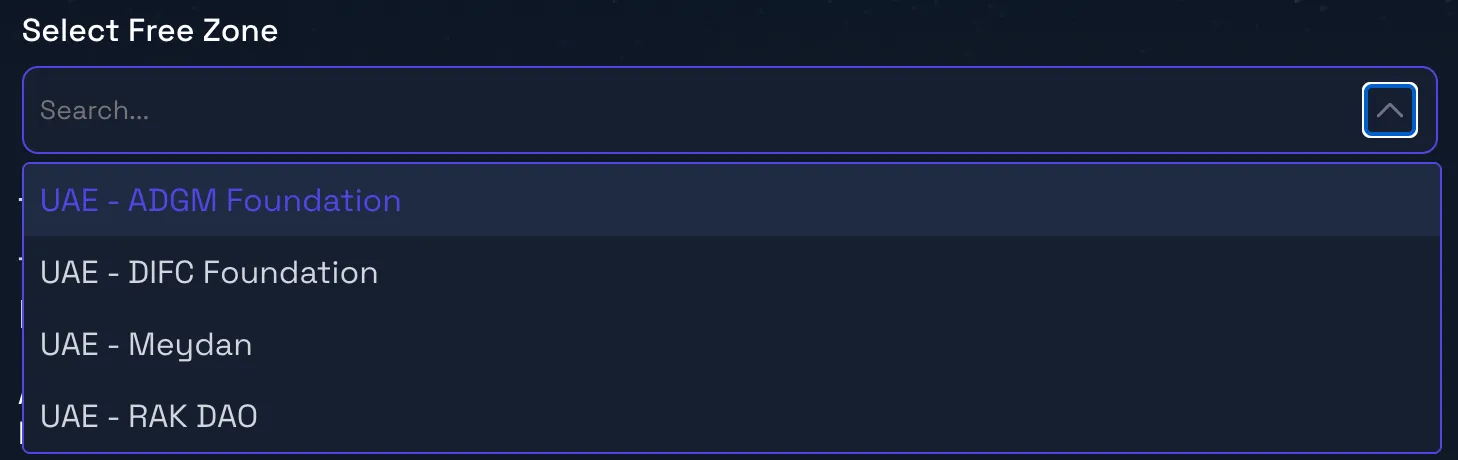
“Have our specialist AI help guide you through your UAE setup and simply put your selection in your basket for online checkout in crypto or fiat, or book a call with our specialists today to explore your options in the UAE or beyond.”
— Otonomos, 8 May 2025
Reference
Book FREE call — calendly.com
| Entry no. | Filed | Jurisdiction | Exhibit | Name of record | Pages | Status |
|---|---|---|---|---|---|---|
| OTN-2024-035 | 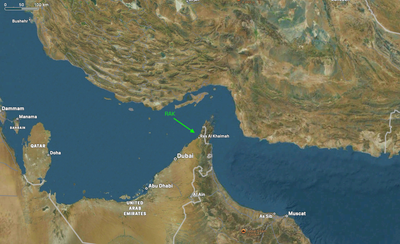 | Ras Al-Khaimah in UAE launches framework for DAOs Ras Al-Khaimah, often abbreviated as RAK, is the northernmost Emirate of the United Arab Emirates (UAE) and serves as its largest city and capital. It is situated on the Musandam… | 01 | Filed |
Form OTN-2
Monthly intel on jurisdictions, structures, and entity strategy for builders in crypto and tech.
End of entry OTN-2025-015
Filed by Otonomos