
Form OTN-1 · Register
Loading the Register.
Form OTN-2
Get the
new issue.
Monthly intel on jurisdictions, structures, and entity strategy for builders in crypto and tech.
Form OTN-1 · Register
Loading the Register.
Form OTN-2
Monthly intel on jurisdictions, structures, and entity strategy for builders in crypto and tech.
This is to certify that the entry
was filed in the Register on 28 February 2025, under the jurisdictions Investing, Regulation, Web3 Entrepreneurship, VC, Tokens and Tokenisation, Smart Contracts and Crypto.
Standfirst
This third part of our March Funding Special is looking at compliant fund raising via platforms such as Angel.co, Echo, Fairmint and Legion as a possible synthesis between the VC and the decentralized ways in resp. Part I and II.
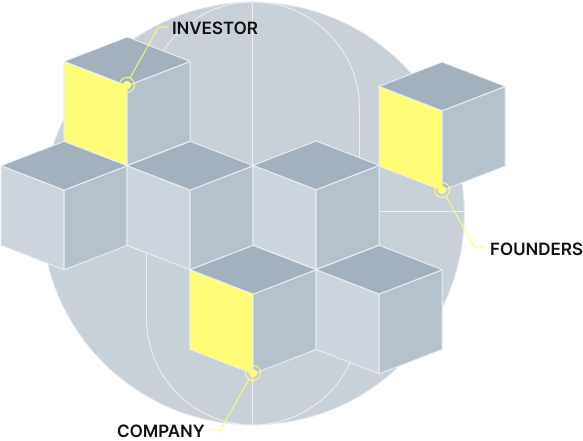
In Part I, we looked at Web2 fundraising models as the reigning thesis. Part II then looked at how Web3 put forward an antithesis, trying to decentralize capital formation. This Part III is looking at complaint offerings via platforms such as Angel.co, Echo, Fairmint and Legion as a possible synthesis.
AngelList goes back to 2010 and was launched by Naval Ravikant and Babak Nivi with an initial focus on fundraising and hiring (later spun-off into Wellfound) and a more recent pivot towards pooling investors in fund-type structures.
Fundraising on AngelList is designed to simplify the process for startups while giving investors streamlined access to opportunities. Here’s how it works:
Raising on AngelList can be fast—some raises close in days—and emphasizes efficiency over traditional VC roadshows. Startups benefit from access to a broad investor pool (over 100,000 accredited investors use the platform), while investors get curated, vetted opportunities.
Since 2010, AngelList has facilitated billions in funding, proving it’s a go-to for early-stage capital in the tech and startup world, so as a founder looking for equity capital who is looking to streamline their raise and find a way to show it to a broad base of (accredited) investors, Angel should be considered. However we did receive feedback from a number of Web3 companies that Angel rejected their profile. Investors, in turn, gripe about the highish fees when investing via a syndicate.
Overall, the sense is that Angel is now more focused on the (institutional) investor side rather than the (scrappy) founder side..
Echo.xyz is designed to connect investors with early-stage startups and cryptocurrency projects, enabling collaborative investment opportunities.
Similar to Angel, it operates by allowing experienced investors, referred to as "Group Leads," to create investment groups. These leaders share deals they’re personally investing in, and other users can join these groups to co-invest on the same terms. The focus is primarily on digital assets and innovative startups, aiming to democratize access to private funding rounds:
Echo’s appeal lies in its community-driven approach, blending the expertise of seasoned investors with the enthusiasm of a broader crowd. It’s particularly geared toward those comfortable with crypto and high-risk, early-stage investments, offering a structured yet flexible way to participate in a decentralized economy. Since its beta launch, it’s facilitated significant funding—tens of millions across dozens of deals—showing it’s carving out a niche in the crypto investment space.
However, spontaneity of investing has its regulatory limits, which in practice means that individual investors will be vetted on their eligibility (read: accreditation) before they are allowed to invest via Echo, and the onboarding is fully KYCd.
Faimint puts “all your equity, onchain”, using blockchains to issue, manage and transfer equity by letting investors hold tokenized stock in their wallet and using the portable Open Captable Format (OCF) from the Open Captable Coalition.
Startups begin by integrating Fairmint’s tools into their own websites, creating a single URL to a customizable investment portal—think "invest.yourcompany.com."
This portal lets you select all major SAFE templates or your own custom agreement, and supports side letters and token warrants.
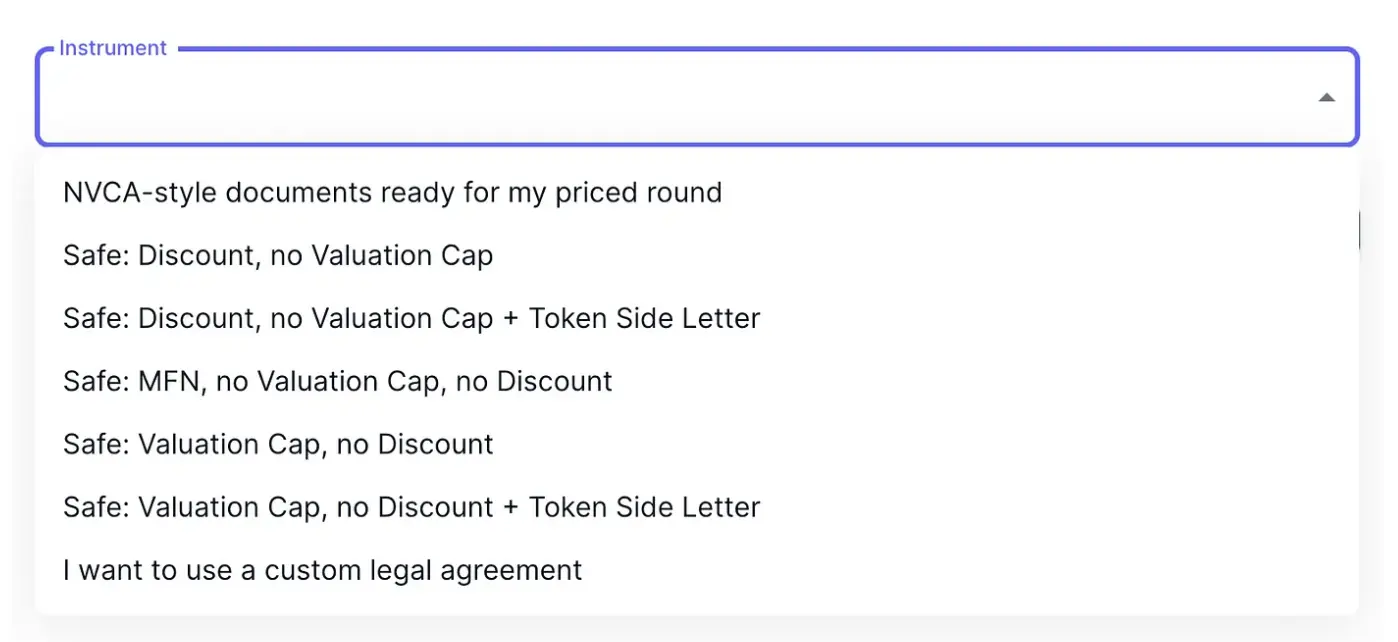
The process is powered by smart contracts on the blockchain, typically Ethereum-compatible, which automate the issuance of tokenized equity (ERC-20 compatible tokens).
This means no intermediaries like special-purpose vehicles (SPVs) are needed—investors send funds (crypto or fiat) directly, and the tokens representing their stake are issued instantly. However, your project will need to be setup as. U.S. C-Corp.
Fairmint handles compliance, embedding regulatory requirements—like lockup periods or transfer restrictions—into the tokens themselves, ensuring adherence to U.S. securities laws (e.g., Reg D, Reg A+).
For founders, it’s a plug-and-play setup. They can launch in a few clicks, customize the portal with their branding, and manage everything via a dashboard. This includes cap table management—Fairmint, as an SEC-registered Transfer Agent, consolidates investors into a single cap table line (roll-up investments) if desired, keeping it clean and avoiding the clutter of multiple SPVs. The platform also offers tools for KYC (Know Your Customer) and AML (Anti-Money Laundering) checks, SEC filings, and state blue sky compliance, all automated to reduce legal overhead.
Investors benefit from flexibility and potential liquidity. They can invest privately (e.g., via invite-only links for VCs) or publicly (if the offering allows general solicitation), and the tokenized equity can potentially trade on decentralized secondary markets, unlike traditional private shares.
Fairmint doesn’t custody funds—transactions are peer-to-peer, reducing risk and fees. Pricing is straightforward: basic SAFE issuance is free, while roll-up features cost a one-time fee.
The big idea is community ownership. Beyond traditional investors, Fairmint lets startups reward contributors—like early users, contractors, or fans—with equity, aligning their interests with the company’s success.
It’s pitched as a Web3 layer for the startup stack, turning equity into a programmable tool for engagement and growth. Since its founding in 2019 by Thibauld Favre and Joris Delanoue, it’s aimed to shift the paradigm from elite-only funding to a broader, stakeholder-driven model.
Legion Ventures is a community-driven, early-stage venture capital platform focused on making private investment opportunities, particularly in Web3 and cryptocurrency projects, accessible to a broader audience.
Founded in 2021 and based in Romania, it aims to democratize access to high-quality, early-stage investments traditionally reserved for large venture capital firms.
The platform offers a range of services, including funding, marketing support, and guidance for blockchain startups, with a portfolio that includes decentralized finance (DeFi), non-fungible tokens (NFTs), and infrastructure projects.
Legion Ventures emphasizes transparency and community involvement, leveraging Web3 principles to provide retail investors with opportunities to participate alongside major players like Binance Labs and Sequoia.
It has invested millions in over 140 projects, boasting a significant community of over 15,000 active members. The $LEGION token enhances user benefits, such as staking rewards, platform fee discounts, and access to exclusive investment opportunities.
However, as with many projects that claim to make investing more accessible to a wider public, regs (see below) stand in the way of making this work, unless platforms become fully licensed to raise from retail.
Legion makes that claim but is - like all other platforms - restricted:
The biggest barrier to broader community investing remains a 92-year-old rule: the Accredited Investor Rule from the Securities Act of 1933.
Despite a recent broadening of the Accredited Investor definition, accreditation arguably is one of the major injustices of the modern world:
First, Accreditation is based on wealth, not knowledge. The SEC’s definition relies on arbitrary financial criteria — such as a net worth of $1 million or an annual income of $200,000 — rather than actual financial literacy or investment expertise. This outdated standard excludes millions of highly knowledgeable individuals from the highest risk/reward investment opportunities, instead reserving them for people who are already wealthy.
The Accreditation is essentially patronizing: it cuddles the collective instead of expecting individuals to take responsibility.
This cuddling disproportionately affects younger, educated investors who are essentially barred from an opportunity to make their education pay off by giving them exposure to early-stage ventures.
Perversely, the 401k plans they will contribute to via their early employers will likely invest in VC funds!
Accreditation hence is based on a Government not trusting its own people.
By keeping private equity within an exclusive club of already wealthy investors, the Accreditation rule restricts access to wealth-building opportunities for a more broader investor base.
The difference however with a private member club is that Reg D is a club whose membership is decided by Government…
Unless the Trump or any other U.S. Administration broadens or wholesale revises the Accreditation rule, the Web3 dream of democratizing investing will remain a chimera, unless platforms are comfortable with living dangerously.
Continue to Part IV.
*> Speak to us to see what works for your needs. Schedule a FREE call today.
Book a FREE call
| Entry no. | Filed | Jurisdiction | Exhibit | Name of record | Pages | Status |
|---|---|---|---|---|---|---|
| OTN-2026-001 |  | The Otonomist - February 2026 In this month's issue of The Otonomist, we introduce a new section and bring a previous one back. We added an "Decentralized Learning" section to push educational contents, and… | 01 | Current | ||
| OTN-2025-008 | No cover on file | The Otonomist - March Fundraise Special: Things They Don’t Tell You When You’re Looking to Raise Funding In this March Funding Special, we take an unadorned approach to fundraising and give an update on what our dev desk has been working on. | 01 |
Form OTN-2
Monthly intel on jurisdictions, structures, and entity strategy for builders in crypto and tech.
End of entry OTN-2025-006
Filed by Otonomos
| Filed |
| OTN-2025-007 | No cover on file | Part IV. Free solo: Going the self-financed route In the last part of our Fundraise Special, we look at a possible third and arguably hardest way: growing your business out of its own revenue. | 01 | Filed |