
Form OTN-1 · Register
Loading the Register.
Form OTN-2
Get the
new issue.
Monthly intel on jurisdictions, structures, and entity strategy for builders in crypto and tech.
Form OTN-1 · Register
Loading the Register.
Form OTN-2
Monthly intel on jurisdictions, structures, and entity strategy for builders in crypto and tech.
This is to certify that the entry
was filed in the Register on 30 June 2024, under the jurisdictions Articles and Unbounded Thinking.
Standfirst
Simon Lang outlines how how decentralised funding mechanisms, web3 communities, and blockchain-based sharing are boosting science. In keeping with his theme, we begin with an abstract.... Abstract Science is a collaborative process, often across national borders. At the same time competition exists between research groups striving to win kudos, recognition, resources and funding for their research work. Recognition and acceptance for the work comes in the form of papers published in the…
Simon Lang outlines how how decentralised funding mechanisms, web3 communities, and blockchain-based sharing are boosting science. In keeping with his theme, we begin with an abstract....
Abstract
Science is a collaborative process, often across national borders. At the same time competition exists between research groups striving to win kudos, recognition, resources and funding for their research work. Recognition and acceptance for the work comes in the form of papers published in the recognised learned journals for that scientific discipline, following a peer review process. This places the power for disseminating new research in the hands of a small number of publishers who impose financial barriers to publication. There have also been suggestions of partisan behaviour, with some journals alleged to favour submissions from their preferred groups. Research with commercial applications also meets friction in its efforts to raise funding and move to a commercial operation.
Techniques developed in the world of Decentralised Finance (DeFi) can offer novel solutions to groups wanting to to raise funding by commercialising their research. Pure research with no immediate commercial application may also benefit by seeking funding from new sources outside the normal confines of research grants, government funds, industry and philanthropy. Structures found in DeFi are beginning to offer solutions to the barriers in publishing and managing research data, and those of retaining ownership of intellectual property (IP) arising from research.
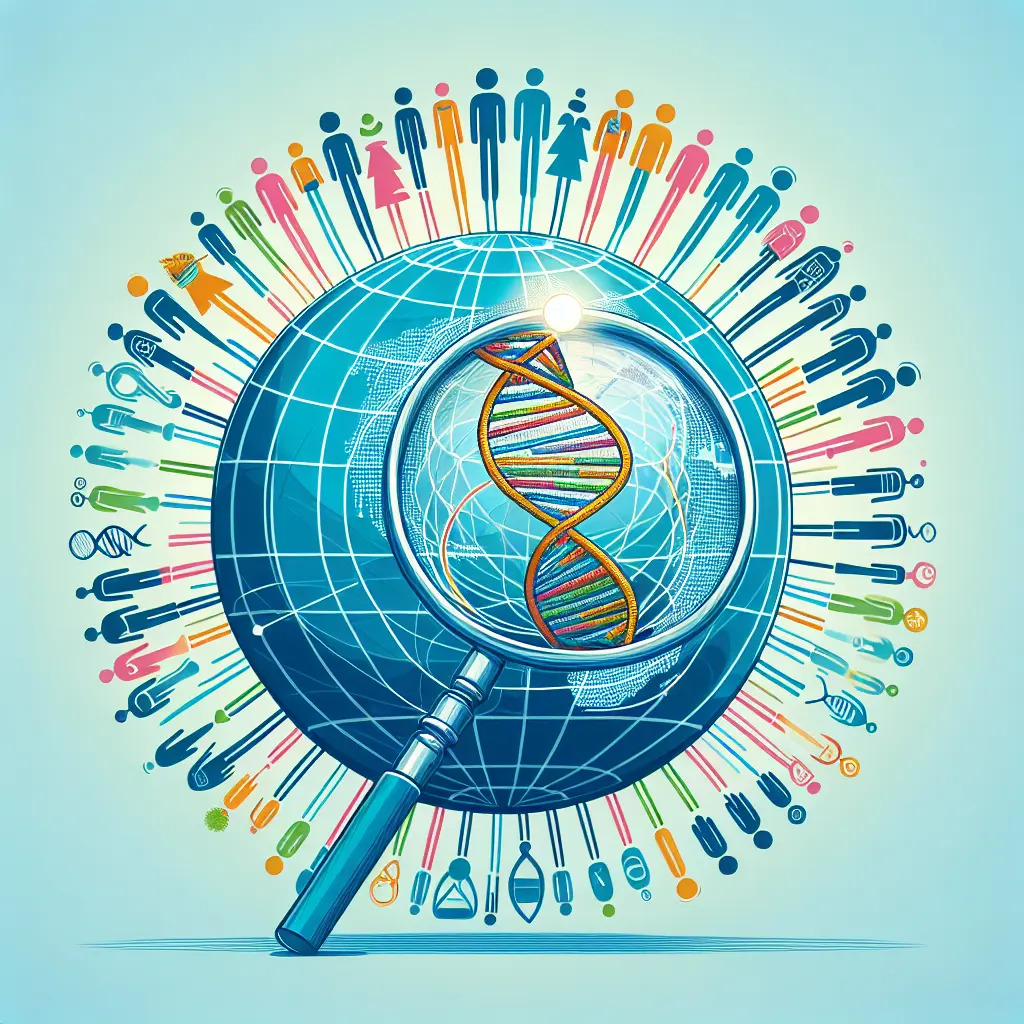
The origins of DeSci can be traced to correspondence in Nature in 2021, where Sarah Hamburg of University College London, Division of Psychiatry highlighted pain points in research which could be eased using tools available in Web3. She coined the term ‘Decentralised Science’, shortened to ‘DeSci’.
The Ethereum1 foundation2 website offers the following description from Juan Benet, founder of Protocol Labs3: “Decentralized science (DeSci) is a movement that aims to build public infrastructure for funding, creating, reviewing, crediting, storing, and disseminating scientific knowledge fairly and equitably using the Web3 stack.
DeSci aims to create an ecosystem where scientists are incentivized to openly share their research and receive credit for their work while allowing anyone to access and contribute to the research easily. DeSci works off the idea that scientific knowledge should be accessible to everyone and that the process of scientific research should be transparent. DeSci is creating a more decentralized and distributed scientific research model, making it more resistant to censorship and control by central authorities. DeSci hopes to create an environment where new and unconventional ideas can flourish by decentralizing access to funding, scientific tools, and communication channels.”
DeSci aims to provide alternatives to address some of the shortfalls of the current models in research - problems such as scientists needing to spend more time on grant applications than conducting science, and the difficulty of securing funding for small-scale projects.
There are existing online systems for administering funding applications centrally. However, blockchain technology is opening up entirely new solutions to some of these common challenges for groups working to advance science.
The fundamental and enabling structure of DeSci is blockchain technology. It is the same underlying platform that Cryptocurrencies use and it offers powerful new tools. One of these is immutable records, or the ability to document an event in a permanent way that cannot later be edited or corrupted. Apps are built which utilise this attribute and which open up possibilities for sharing and collaborating without losing control over intellectual property, for sharing data sets with complete transparency, even for realising the financial value of research by selling tokens.
Another key property of blockchain-powered structures is the capacity to set up democratic groups which are equipped to govern themselves using tokens to represent voting rights. This structure lends itself to a self-governed collaboration group and offers not only equitable governance and directional decision-making structures, but also the ability to distribute funds and value, for purposes such as paying facility owners, reimbursing collaborators, or offering tokens to recognise the work of peer-reviewers. Critically there is no one central point of control, hence why it can be deemed de-centralised. This is no dreamy future vision, such deentralised structures already exist and are at work enabling coders and entrepreneurs to build new infrastructure in the DeFi world.
One option for research groups seeking to raise funding for their projects is to sell some of the future value of the Intellectual Property (IP) rights in the research to an investor who is keen to be involved with the project and own a share of the IP. Access to research data and its inherent value is managed through token ownership. A limited batch of tokens are created by the owners of the IP, the researcher group, who form an equitable governance body where voting rights are set by token ownership. Management of the project moves over to this newly-formed decentralised autonomous organisation (DAO) which manages the project and decides how access to the data is controlled and how any revenue from application of the IP is to be distributed.
Managing this process in practice requires some structure. Creating this structure requires specialist knowledge and would detract from the research effort. To facilitate this process Molecule4, a platform dedicated to the distribution of private grants in DeSci has been established by Tyler Golato and Paul Kohlaas based in Berlin. Largely focused on biotech research, the platform is the underlying structure for a series of independent DAOs, each of which specialises in funding a particular strand of research. Valley DAO5 is dedicated to research in synthetic biology, CryoDAO6 is dedicated to cryopreservation research, AthenaDAO7 on women's health, VitaDAO8 on longevity.
Pipe DAO9 is another research funding scheme, this time for early stage European university research. It combines an investment fund with a mandate for sustainability, positive social impact as well as commercial viability, and provides investors with a dashboard to track their investments. The Pipe ‘Lab to IPO’ platform, based in Manchester and Tallin feels more like an investor project with membership fees, projections of investor returns, an exchange to swap buy and sell tokens, its own governance token called the gDAO, and ‘airdrops’ (investor bonus allocations) based on the GDAO token. The gDAO token is valued at $ 0.045525 at the time of writing, giving a market capitalisation of around $132k. Their aim is to fund 100 projects a year totalling $200M
Tackling ageing:
Protecting the environment
Digital ID and anonymity:The benefits of applying blockchain techniques to science do not end at financial and administrative tools, there are frontline applications also. In clinical trials the tokenisation of patient identities is showing promise. This technique allows for the anonymisation of patient identities whilst still permitting the gathering of data from an individual. It means that it is easier to obtain information about any adverse responses to a trial drug in context of the patient’s life. Patient-level real-world data can be combined from different sources to provide supporting data to clinical trials while maintaining patient confidentiality. This is important for drug manufacturers because the submission of real-world patient data to the national regulatory bodies, including the FDA, can reduce the amount of post-approval follow-up they are required to complete.
Reproducibility: According to a number of recent academic reviews, scientific research struggles with reproducibility of its data, especially in life sciences and has been described in Nature14 as the Reproducibility Crisis. This is due to factors ranging from variation in lab protocol, reagents, sample sizes, even statistical treatments. Reproducing existing results just isn’t sexy science and it fails to ignite excitement in researchers or funders. One early-stage Web3 resource which will help to solve this include OpSci Commons15, a decentralised repository for open-source data which allows researchers to make their data sets available for further analysis by unaffiliated parties. In the US, the National Institute of Health requires researchers operating under one of their grants to share their data. This repository forms a convenient and free solution to achieve that.
Ranking and citations: A scientist’s reputation is currently underpinned largely by their history of published papers which has direct bearing on their ability to secure future funding. In a future application of blockchain tools, communities would issue NFTs (non-fungible tokens, a unique permanent digital record on a blockchain usually representing rights to ownership of an asset) to scientists who have completed peer reviews, published scholarly articles, have academic certification, shared data, conducted mentoring or other valued actions. The sum of these NFTs would build their digital reputation. As yet this remains a good idea with little sign of a practical solution available for use.
DeSci Africa16 based in Nigeria is an community of scientists dedicated to supporting science projects in Africa through decentralisation. Their focus is in raising awareness of the possibilities of Web3 in enabling research and identifying potential sources of funding.
DeSci London is another community very active in promoting the potential of Web3 tools for science. They have regular meetings and presentations on the last Thursday of each month, recent ones of which have focused on subjects such as: Why psychologists should care about Blockchain data, social prescribing, neurotechnology and brain/computer interfaces, and the work of biobanks. There are also DeSci groups active as DeSci Berlin, DeSci Asia, DeSci Tokyo, DeSci Nordics, DeSci Dubai, DeSci Denver, and DeSci Youths.
A fundamental blocker in traditional science is the cost of submitting and publishing research papers. Many of the learned journals are owned by large corporates who charge both the authors and the readers, who must subscribe to access the work. The time-honoured process of Peer Review, used to help prepare and evaluate the paper before publication is a laborious and largely unpaid burden on the community of researchers in a similar field. A DeSci approach to this issue is Ants-Review17, a protocol designed to recognise the contributions of peer reviewers, reward them and recognise the best reviews in an anonymised, gamified environment. With considerable irony the paper detailing this initiative is published by Springer, a large publishing corporate, and is available behind a paywall upon payment of $25, which further highlights the fundamental problem18.
Decentralised Science is opening new potential solutions to some long-standing science roadblocks by re-applying solutions already used successfully in business and finance, especially Web3 tools and decentralised thinking. Many of the examples discussed here are very early-stage projects and the space is highly dynamic. DeSci momentum is gathering and more seminars, societies and initiatives are forming constantly.
AxonDAO ensures that scientific research is transparently funded, governed by ethical standards, and driven by the collective. Open Science DAO
We're a community-owned open science ecosystem that unlocks data silos, revolutionizes collaboration, and democratizes funding.
From their whitepaper: A decentralized think tank to foster growth and incubate scientific ideas. DeFi community/DAO to fund scientific research, primarily biomedical.
GenomesDAO strives to meet the increasing expectations of research organizations, institutions as well as customers for the security of genomic data and the quality of research workflow.
The future of biomedical science is an open, community-run network of laboratories. CRO/Marketplace focus.
DeSciWorld aims to connect the decentralised and scientific communities to help further the mission of Decentralising Science.
NFT funded, DAO governed collective investing in accelerating solutions & cures to Alzheimer’s disease and advancing brain wellness and longevity. 80% of funding dedicated to investments for ROI and impact, and 20% to fund primary research grants.
FrontierDAO is a Research and Development DAO for science and engineering that looks to incubate promising innovation in their focus areas of fusion energy, space exploration, and climate solutions. The end goal is to catalyze commercialization of the most promising technologies. They raise funds through membership and their NFT collection, available on OpenSea. Their NFT collections include IP-NFTs which are foundational to their scientific publishing platform, FrontierRegistry, which is an open publishing platform for scientists, academia, engineers and researchers who can opt to self-publish and choose to mint their research papers as NFTs. FrontierRegistry is a user-owned platform.
a decentralized autonomous organization in search of a cure for hair loss.
an alliance of digital health innovators working to minimize suffering in the universe by accelerating clinical discovery.
AntidoteDAO is an altruistic Web3 DAO Dedicated to Funding Various Cancer Initiatives.
Reputable DAO is a biohacking and personalized wellness community that allows members to sell their data to third parties over places like the Ocean marketplace.
Future Foods DAO is a community-owned collective funding early-stage alternative protein open-source research. We identify and fund the most promising foundational alternative protein research.
making use of collective intelligence to solve complex problems. Focusing on quantitative finance, it makes use of DeSci as a tool to coordinate its members.
AI-Powered DeSci platform using patent-pending technology to advance Precision Medicine for under-representative populations
Open Science Collaborative offering free tools for research code reproducibility and safety, assessment of study design, improvement of research methodology, and recognition of commitments.
A decentralised group of researchers focused on Chemistry.
Simon Lang works with Otonomos, the platform enabling the setup of companies, partnerships, funds, and trusts worldwide for the Web3 community.
| Entry no. | Filed | Jurisdiction | Exhibit | Name of record | Pages | Status |
|---|---|---|---|---|---|---|
| OTN-2025-013 |  | Company formation and corporate services: the last analog bastion of the business world In this post, we examine the quirks of the US$100BN a year corporate services market and how the interplay between blockchains and AI have the potential to drag it into the… | 01 | Filed | ||
| OTN-2024-024 | No cover on file | When to switch from a prop trading rig to a full fund Are you a crypto proprietary trader thinking of taking things to the next level by setting up a fund? Here is what you need to know. For a lot of us, the big appeal of proprietary… |
Form OTN-2
Monthly intel on jurisdictions, structures, and entity strategy for builders in crypto and tech.
End of entry OTN-2024-022
Filed by Otonomos
| 01 |
| Filed |
| OTN-2024-023 |  | What to ask yourself when you set up a DAO DAOs are major elements of the Web3 world. As funding tools and mechanisms for decentralised collaboration and consensus, they highlight the some of the most exciting… | 01 | Filed |